spring
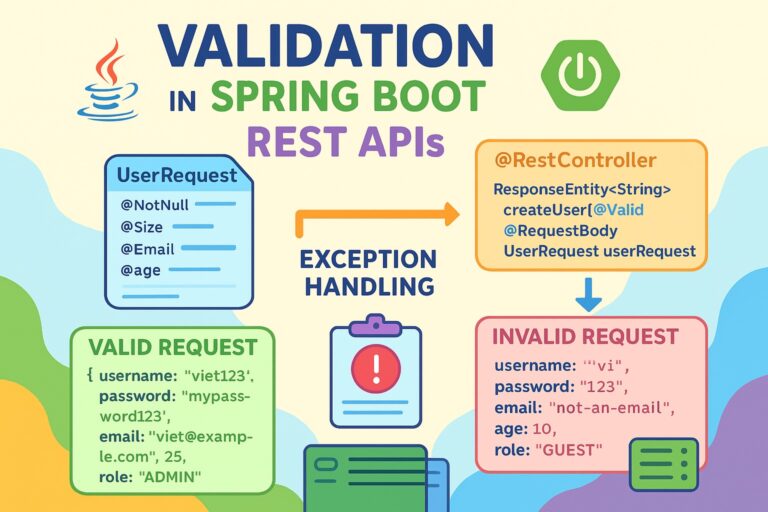
Building RESTful APIs often involves handling client input. To ensure data integrity and prevent invalid values from polluting your system,
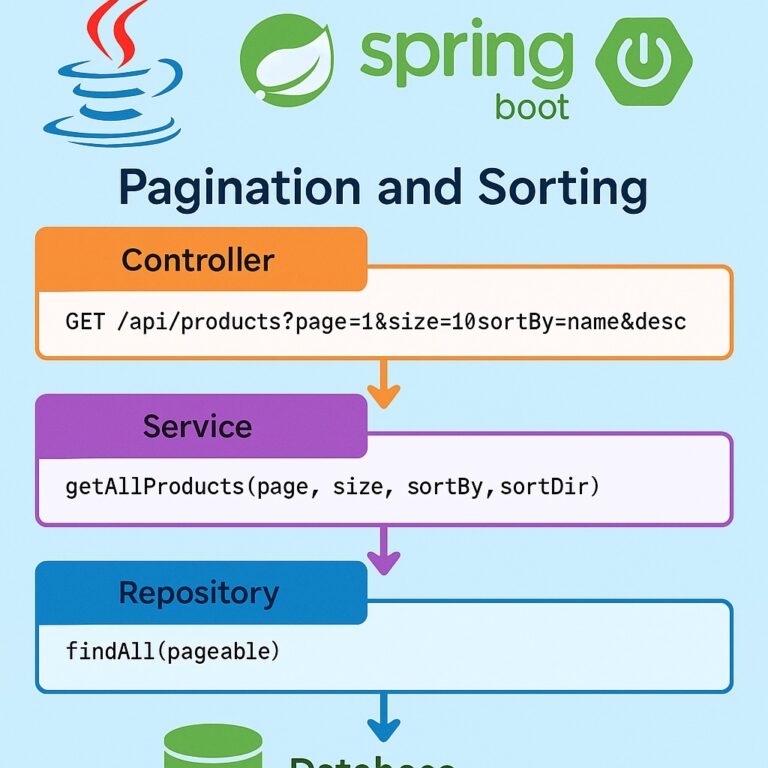
In modern web applications, handling large datasets efficiently is essential. Instead of returning all records at once (which is inefficient

Developing RESTful APIs is a cornerstone of modern backend development. When using Java, Spring Boot is the go-to framework for
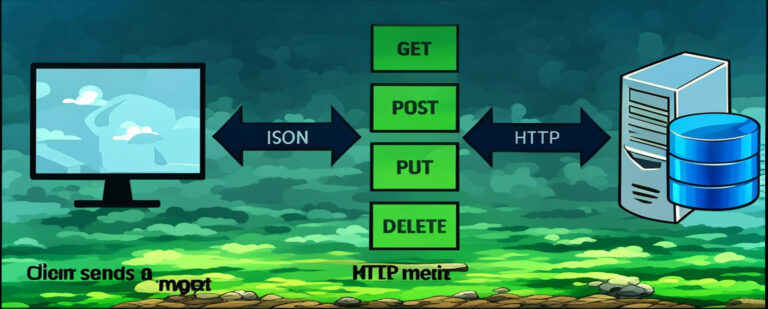
Introduction REST (Representational State Transfer) is an architectural style used for designing networked applications. It relies on a stateless, client-server

In today’s distributed systems world, responsiveness, scalability, and loose coupling are top priorities. Event-Driven Architecture (EDA) is a powerful design

Writing clean and maintainable code is essential in any Java application, especially in microservices where modularity and simplicity matter most.
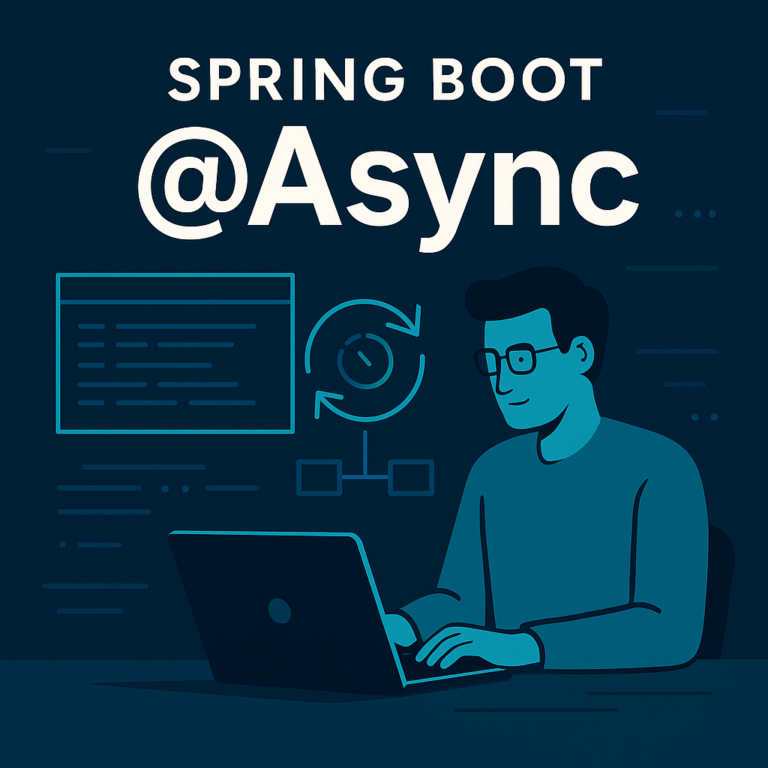
Spring Boot provides the @Async annotation to execute methods asynchronously. This improves application performance by freeing up the main thread

Spring Data JPA provides powerful annotations like @Modifying and @Transactional to perform update and delete operations efficiently. These annotations allow
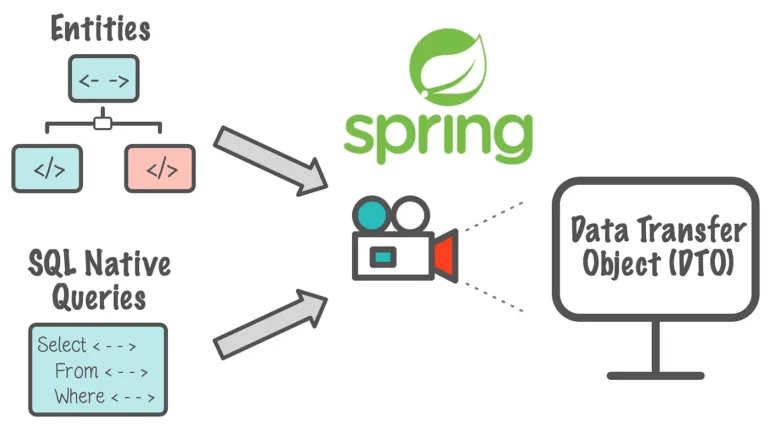
Spring Data JPA provides an abstraction over traditional JPA, making database interactions easier. While JPA’s derived and JPQL queries are

Spring Boot provides powerful dependency injection features, allowing developers to manage beans effectively. Two key annotations, @Primary and @Qualifier, help
